Super(intelligence) models
Hurricanes don't care about your models. They're going to do what they're going to do.

Funny thing about hurricanes — they don't give a shit what you think.
As I sit here writing this at 5 a.m. on the morning Hurricane Isaias bears down on Northwest Florida, I can't help but think of the last time we had a Big One.
Hurricane Ivan in 2004 was one of those storms we talk about the rest of our lives. For me, doubly so — Shannon and I got married just a few days later. No power. Maybe a third of the guests, all local. No reception. Spent our wedding night in the airport in Mobile, Ala., so we could still go on our honeymoon in Napa Valley.
So much has changed since then. Life. Death. Kids. Careers. The usual stuff.
Hurricane forecasting was good then, and it's gotten even better. But I'm a firm believer in there being such a thing as too much information. I cringe every time I see someone share a "spaghetti model," as if they're suddenly a meteorologist. Don't get me started on the amateur weatherman Facebook pages.
I grew up sailing on Pensacola Bay. My grandfather was one of those salt-of-the-earth dudes who came into adulthood post-World War II. There aren't many of that ilk left. He never did a ton of hurricane prep. But what he did, he did well. Generator. Water. Food. Batten down the hatches, then hunker down with family, and help your neighbors.
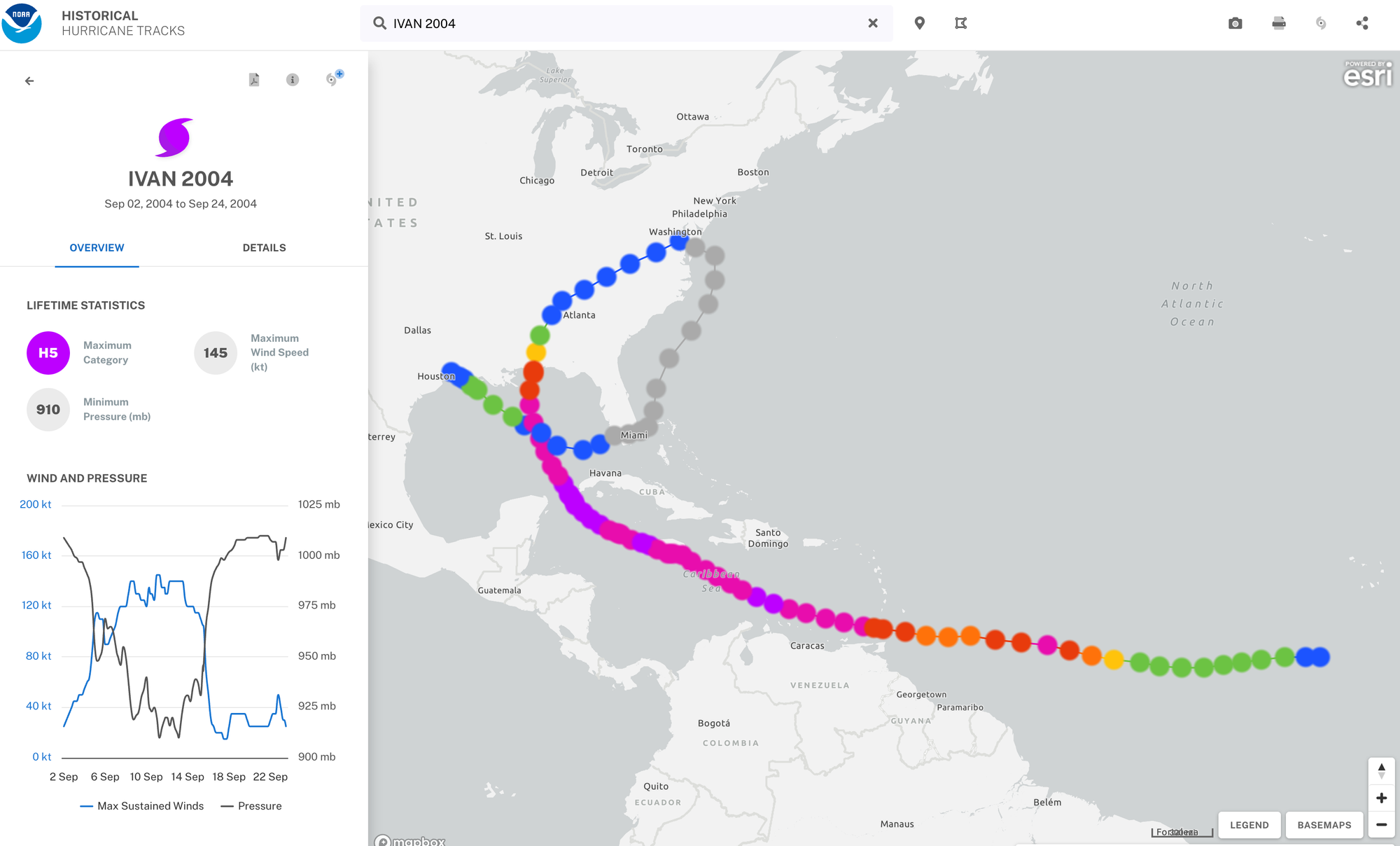
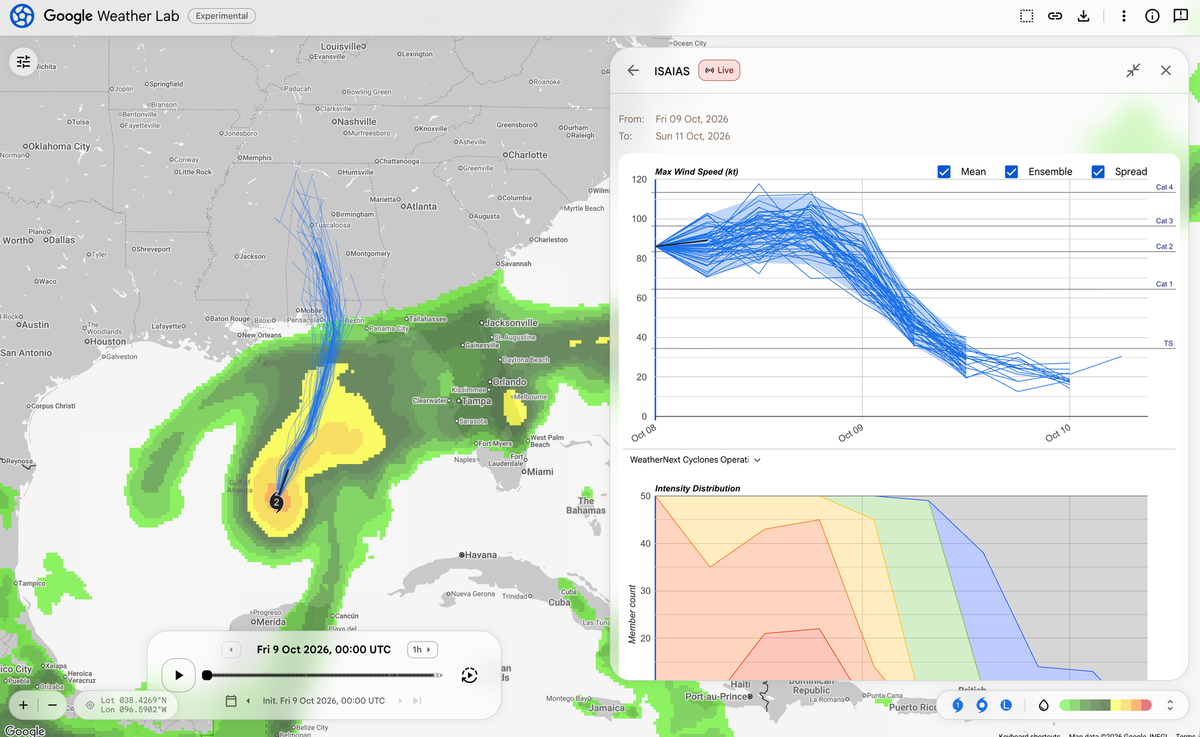
Hurricane Isaias didn't leave a ton of time to prepare. It spun up in the southwestern Gulf on October 6 and will make landfall October 9. Hurricane Ivan, by comparison, formed September 2, 2004, and made landfall a full two weeks later. We watched it cross the Atlantic Ocean, then the Caribbean. It shot the gap between the Yucatan Peninsula and Cuba before heading to Pensacola. (Then looped through the eastern United States before reforming in the Gulf. Hurricanes are weird like that sometimes.)
Forecasting has changed a lot since 2004. The biggest difference has got to be in compute. There's simply more — much, much more — computer power to crunch the numbers. Call it AI models, if you must, but it's not like computers weren't doing this work before. Google's DeepMind-powered Weather Lab is a pretty cool one. I like it. You can even download its data and vibe code things yourself, if you want. I'll have to play with that.
But here's something it doesn't change, and shouldn't change: How you prepare. Before these "AI models," we still had a forecast that was easily good enough to tell you if you should start preparations, and to what extent. If a storm's going to enter the Gulf, you start making sure you have food and water and fuel, just in case. If it looks like it's heading in your general direction, you start hardening your home.
If, like Hurricane Isaias, it's coming right at you? You do all the things. Maybe even evacuate. (Not something I've ever done.)
Hurricanes are fickle creatures. They "wobble." That is, they tend to jump around in their expected track, especially toward landfall. That's how we got caught with our pants down in 2020 by Hurricane Sally. It was expected to make landfall farther west than it did. And while it was hardly the worst storm I've ever been through, I should have been more prepared. I wasn't alone. Sixty or even 100 miles one direction or the other can make a huge difference when it comes to your hurricane experience. Hurricane Michael in 2018 absolutely thrashed the Panama City area. But here, in Pensacola, about 95 miles or so to the west? Nary a drop of rain. (You always want to be on the west side of a storm.)
These "AI models" are trying to do different things than the "cone of uncertainty" graphics you see. One is data-based prediction. The other is public communication. Those are not the same thing in the slightest, and yet over and over again folks share the AI models on Facebook as if they're how you should plan. They're not.
So whether an "AI model" forecast track is better than a "traditional" track doesn't really matter to me. Sure, it's a fun exercise, but a storm is going to do what it's going to do.
And so you plan as if it's trying to kill you.